

NNSA's Aerial Measuring System (AMS) provides specialized airborne radiation detection systems for measuring contamination.
The NNSA’s Office of Counterterrorism and Counterproliferation (CTCP) is integral to the U.S. Government’s layered defense against nuclear terrorism and nuclear proliferation. CTCP’s scientific capabilities help provide early threat indications and inform the security of nuclear materials worldwide. Its operational assets are used to locate and defeat terrorist nuclear devices and mitigate the effects of radiological incidents around the globe. This “defense-in-depth” strategy requires adversaries to defeat multiple layers of security to obtain and detonate a nuclear device.
NNSA’s nuclear counterterrorism, counterproliferation, and incident response missions harness the Department’s unparalleled command of nuclear science to understand and contend with nuclear threats. CTCP performs three core functions:
Read how NNSA's specialized teams deal with nuclear and radiological threats.
- Preparing for nuclear and radiological incidents and accidents through planning, training, and exercises
- Countering adversary efforts to acquire and use nuclear capabilities
- Responding to nuclear and radiological incidents and accidents worldwide
CTCP manages the Nuclear Emergency Support Team (NEST), a cadre of on-call technical specialists who are trained and equipped to respond to all manner of nuclear events. Notable NEST capabilities include mobile teams that can search for nuclear devices based on a variety of signatures and threat intelligence, as well as technical personnel whose knowledge of nuclear weapons is used to characterize and defeat the device. NEST's nuclear forensics personnel can perform technical analysis to determine the origin of nuclear material found outside of regulatory control or used in a nuclear device. NEST also performs a variety of public health and safety missions, providing technical guidance to federal, state, and local officials following nuclear incidents. By providing dispassionate scientific advice during fearful events, NEST equips decision-makers with the knowledge to save lives and help the public recover quickly from crises.
CTCP works to reduce the threat from states attempting to develop nuclear weapons or advance nascent nuclear capabilities. Harnessing the technical expertise and infrastructure at the National Laboratories, the office collaborates with partner U.S. agencies to develop nuclear counterproliferation tools that impede the efforts of proliferant nations to obtain nuclear capabilities. CTCP integrates policy, planning, and operations to achieve U.S. counterproliferation objectives, supporting urgent needs and identifying opportunities to prevent future nuclear threats.
CTCP supports a broad range of U.S. Government planning efforts for nuclear and radiological contingencies. As part of this responsibility, the office provides Liaison Officers and expertise to Department of Defense combatant commands. Through its capacity-building programs, CTCP strengthens domestic and international preparedness to respond to nuclear and radiological incidents and accidents, whether due to malicious acts, accidents, or natural disasters. The office also leads technical and policy engagements with allied foreign governments to advance global nuclear threat reduction priorities.
The Office of Nuclear Incident Policy and Cooperation develops policy and provides capacity-building emergency preparedness training to counter and respond to radiological and nuclear incidents, accidents, and terror threats. As part of this mission the office shares knowledge of nuclear and radiological threats with federal, state, local, and international partners by conducting training, exercises, and information exchanges. These efforts are designed to increase threat awareness and enhance the ability to respond to unforeseen events, whether deliberate or accidental.
Leveraging the capabilities of the U.S. response community, the office carries out domestic and international capacity-building programs and assists in developing nuclear incident response policy in the United States and with international partners. Additionally, its experts provide nuclear and radiological technical support to U.S. and foreign partners; operational support for major public events and emergencies; international nuclear and radiological incident modeling capabilities; and tabletop exercises. The office also provides long-term equipment loans to foreign partners, offers subject matter expertise to develop international guidance and standards with the International Atomic Energy Agency (IAEA), and coordinates with the IAEA’s Incident and Emergency Center for international radiological or nuclear incident response.
The office’s domestic training is designed to enhance nuclear and radiological emergency preparedness and achieve coordinated, effective responses during crises. Exercise planners work closely with partners to develop events such as the Silent Thunder Weapons of Mass Destruction (WMD) Counterterrorism Tabletop Exercises. The office also conducts international exercises and counter nuclear smuggling scenario-based policy discussions. Virtual training is also offered for state and local entities involved in radiological emergency response and communications, as well as other organizations that use radioactive materials in their operations. Topics include radiation fundamentals, protective measures, and a variety of strategic communications subjects.
Additional international activities include workshops and training specifically designed to build foreign partners’ emergency preparedness capacity. These events focus on responding to radiological emergencies, securing major public events, and countering radiological dispersal devices, or “dirty bombs.” The office also delivers radiological medical training for foreign first responders and partners with the North Atlantic Treaty Organization (NATO) and the Department of Defense to hold training courses on nuclear and radiological incident response.
The Office of Nuclear Threat Science generates scientific knowledge of nuclear threat devices—including improvised nuclear devices (IND) and radiological dispersal devices (RDD)—proliferant state weapons, and stockpile weapons outside of state control. This specialized knowledge is used to influence an extraordinary range of U.S. and international nuclear counterterrorism and counterproliferation policies.
The office strongly influences security measures to keep weapons-usable nuclear material beyond the reach of terrorists, including standards for the storage and transport of such material. Similarly, its knowledge of nuclear materials helps NNSA and partner agencies prioritize certain countries and facilities as they work to secure nuclear materials around the world. This scientific knowledge also factors in the consideration of disposition options for special nuclear material.
The office’s understanding of nuclear threat devices is embedded in emergency response policies at the federal, state, and local levels, as well as the incident response postures of many foreign governments. The office also contributes to the development of threat reduction capabilities such as nuclear search and detection technologies, tools to disable nuclear threat devices, nuclear forensics methods, and technical solutions to deny adversaries nuclear capabilities.
Technical experts in the Office of Nuclear Threat Science provide analytic support to the Intelligence Community, helping to identify troubling activity involving nuclear and radiological weapons long before it reaches the operational stage. The office also directly supports the National Security Council in developing and implementing nuclear counterterrorism and nuclear counterproliferation policies and leads technical and policy exchanges concerning nuclear threat reduction with select international partners.
The Office of Nuclear Forensics serves as NNSA’s lead coordinator for Technical Nuclear Forensics capabilities and policy. The office sustains nuclear forensics personnel, equipment, facilities, and operations in support of National Security Council policy initiatives, which establish government-wide forensics missions and define agencies’ roles and responsibilities. The office also manages the National Nuclear Material Archive, an NNSA program to identify, analyze, and preserve nuclear material samples of value to the nuclear forensics mission.
Nuclear forensic capabilities were first developed for nuclear test monitoring and treaty verification purposes during the Cold War. They are now used for a wide range of national security and law enforcement missions, including determining the origin of nuclear materials outside of regulatory control, such as those seized from nuclear smugglers. If a nuclear threat device were interdicted before detonation, analysis of the nuclear material and device design can yield information about its origin and manufacturer. Should terrorists succeed in detonating a nuclear device, the office has operational capabilities that enable debris analysis and other activities to identify the source of the nuclear material used, as well as provide insights about the device design. Coupled with intelligence and law enforcement information, these capabilities support the process to attribute responsibility for the attack.
NNSA’s nuclear forensics capabilities constitute an important element of the Nation’s strategy to deter nuclear terrorism. Although terrorists are unlikely to steal or illicitly obtain a significant quantity of weapons-usable nuclear material, they could receive assistance from a hostile government. By demonstrating the ability to attribute the source of material that falls into the hands of terrorists, the United States can credibly threaten reprisal against any state that is complicit in an act of nuclear terrorism. As the 2022 Nuclear Posture Review notes, “Deterring states from facilitating acts of nuclear terrorism by others is enabled in part by nuclear forensic capabilities that provide the scientific basis to hold such states accountable.
The Evolving Missions of Technical Nuclear Forensics
Nuclear forensic capabilities can also be used to attribute or resolve ambiguities about a wide range of “unattributed nuclear events,” both malicious and unintentional. These include undisclosed accidents at civil or military nuclear facilities, nuclear weapon mishaps in denied geographic areas, or even an accidental nuclear detonation. Other ambiguous scenarios may involve a state’s limited use of nuclear weapons in a regional conflict – and subsequent denial of responsibility – or an attempt to blame a clandestine nuclear attack on non-state actors.
The Office of Nuclear Incident Response manages the Nuclear Emergency Support Team (NEST), the DOE/NNSA multi-mission emergency response capability. NEST harnesses the Department’s scientific and technical expertise to contend with nuclear and radiological incidents and accidents of any size or category. NEST provides scientific and technical expertise in support of federal, state, local, tribal, and territorial partners to enhance their ability to accomplish critical national security and public health and safety missions.
It is responsible for executing three principal missions: countering weapons of mass destruction (WMD); protecting public health and safety from nuclear and radioactive hazards; and responding to accidents and incidents involving a U.S. stockpile nuclear weapon.
Countering Weapons of Mass Destruction
NEST is at the forefront of the U.S. Government’s counter-WMD mission, providing state-of-the-art capabilities to defend against nuclear and radiological threat devices. For over a decade NNSA has furnished specialized technology and training to regional Federal Bureau of Investigation (FBI) counter-WMD teams in cities across the United States, enabling these teams to identify and impede the function of a nuclear or radiological device. In 2018, NNSA and FBI began enhancing the capabilities of the regional teams as part of the “Capability Forward” initiative. As part of this program, FBI teams are being trained and equipped to take decisive action to defeat WMD devices, accelerating the response to nuclear and radiological attacks and potentially saving American lives.
Protecting Public Health and Safety
NEST protects public health and safety by delivering timely, technically sound, and actionable decision support to federal, state, local, tribal, and territorial authorities in response to radiological or nuclear incidents and accidents. NEST responders are the world’s premiere technical leaders on all aspects of radiological and nuclear emergency preparedness, search, and consequence management. Its personnel are experts in atmospheric modeling, aerial measuring, health physics, and other scientific disciplines necessary to respond to nuclear incidents.
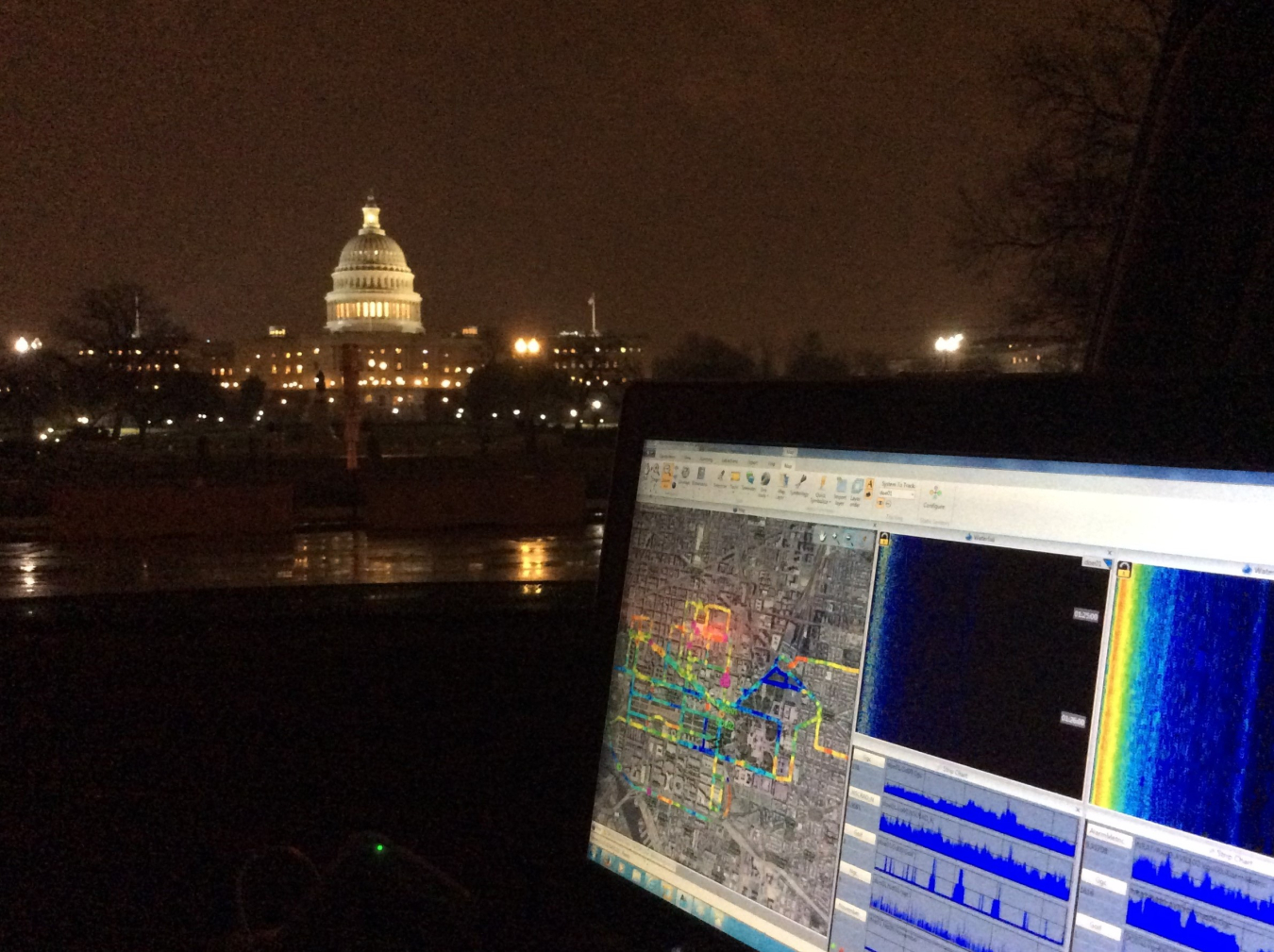
NEST conducts Preventative Nuclear and Radiological Detection (PNRD) operations to protect major public events from nuclear or radiological threats; these events include the Super Bowl, New Year’s Eve celebrations in New York, Las Vegas, and other major cities, presidential inaugurations and State of the Union addresses, and numerous smaller events around the county. PRND activities include the use of NEST’s Aerial Measuring System (AMS), an aviation-based radiological survey capability. AMS teams perform aerial surveys prior to major events to establish a baseline measurement of natural background radiation. These measurements help NNSA identify radiation anomalies on the day of the event. If an anomaly is encountered, NNSA and its mission partners would characterize the situation and respond accordingly.
NEST’s capabilities to protect public health and safety constitute an emergency response architecture that serves not only the United States but also partner nations. During the 2011 Fukushima Daiichi nuclear disaster, NEST personnel with expertise in atmospheric modeling, aerial measuring, and health physics deployed to Japan, where they informed the responses of both the U.S. and Japanese governments to protect public health.
Responding to U.S. Nuclear Weapon Accidents
NEST personnel with scientific and technical expertise concerning nuclear weapons are trained and equipped to respond to accidents involving U.S. nuclear weapons, including a lost or stolen weapon. NEST scientists, technical specialists, and crisis managers work closely with the NNSA Office of Defense Programs and the Department of Defense. NEST actively participates in the annual interagency Nuclear Weapon Accident Incident Exercise (NUWAIX) that is designed to practice a whole-of-government response to nuclear accidents and incidents.